Peptide tracking on iPhone & Android — the complete guide
What a peptide tracker actually needs to do — and how BodyDex handles BPC-157, GLP-1s, TB-500, and other protocols alongside the diet you run with them. Updated August 2026.
Build around your routine
01Your schedule02Your dose history03Your supply
Important
This page is informational. BodyDex is a tracking tool, not a medical device. We don't sell, recommend, or source compounds, and mentions of specific compounds here are for education only — not endorsements. Approval and legality vary by compound and jurisdiction. Always work with a qualified health professional and follow your local laws before starting any peptide or medication protocol.
The short answer
Track peptide schedules, injection sites and vial supply alongside your macros.
Nutrition + protocol history
Records your plan; does not prescribe
More context +
BodyDex is a peptide tracking app for iPhone and Android. It records custom schedules, doses, injection sites, reconstitution calculations and vial supply on-device; it does not recommend compounds or doses. Your diet lives in the same log — calories, protein and meals sit beside the dose history — so a peptide protocol and the nutrition around it don’t need two apps.
What to look for in a peptide tracker
Per-peptide schedules
Different compounds run on different cadences — daily, alternate-day, weekly, or a custom pattern. A real peptide tracker stores each protocol's schedule (cadence, start date, doses per day) so you don't rebuild it each cycle. BodyDex also lets a protocol run as a course of a set number of weeks — reminders and adherence stop when it ends — and carries dose steps you've planned for later weeks. It never chooses a dose; it follows exactly the plan you entered.
Dose units that match what you actually inject
Doses are typed in mcg, mg, IU, or ml depending on compound. The app should accept the unit you draw, not force a universal one.
Per-injection logging, not per-day
If you split AM/PM doses, your log needs to show two entries on that day. A 'one tap = today is logged' button is too coarse to see what actually happened. Pair it with the 12-zone injection-site rotation log.
Reconstitution math
Vial size plus bacteriostatic water volume should translate straight into units on a U-100 syringe for the dose your clinician prescribed. A peptide tracker should answer that without making you reach for a calculator.
Refill / supply alerts
Running out mid-cycle is the most common protocol failure. The tracker should know your supply on hand and warn you with enough lead time to reorder. Once you tell BodyDex what's in the vial, each protocol card shows a level gauge and a rough days-left estimate; an unmeasured vial says so instead of guessing. See the full guide to the vial supply and refill tracker.
Local-first data
Peptide use is sensitive personal data. BodyDex keeps protocol logs in a local SQLite database on your device rather than a vendor's cloud database; AI features send only the photo or question for processing.
Companion data — diet, weight, training
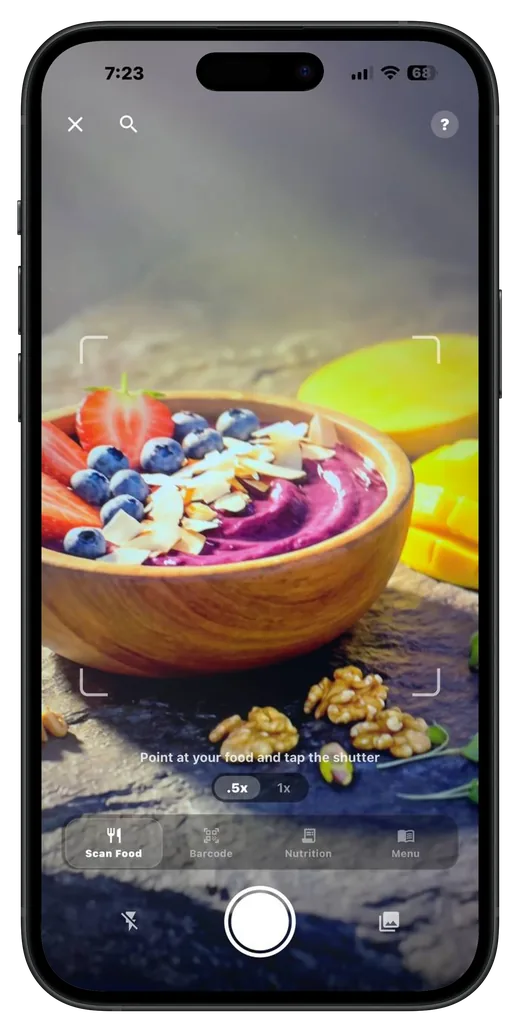
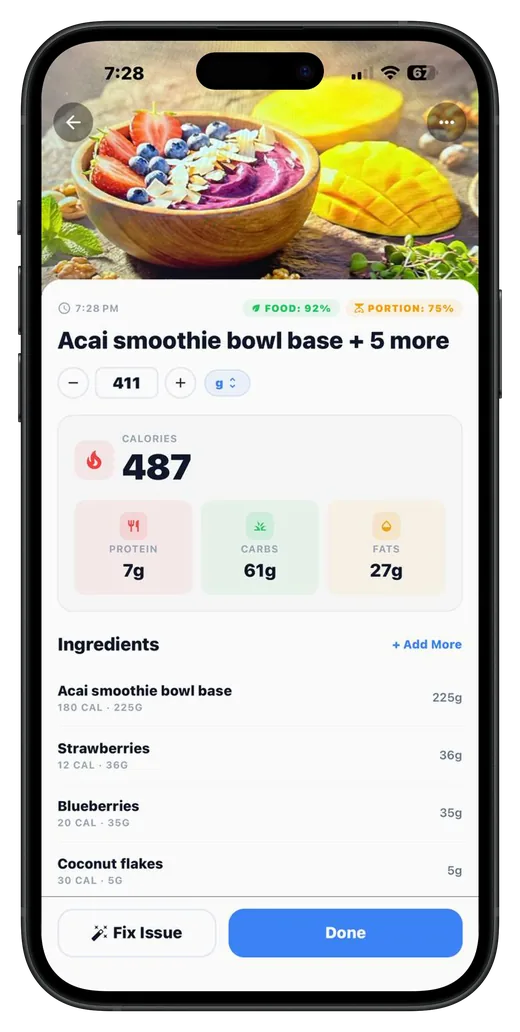
A protocol rarely runs in isolation — diet, training, sleep, and weight all belong in the record. A protocol tracker that's also where you log food and weight keeps everything in one app, with progress views for each alongside your dose log.
How the common peptide tracker approaches stack up
Approach
Pros
Cons
Notes app / spreadsheet
ProsFree, infinitely flexible, you own the data.
ConsNo reminders, no math, no graphs, no supply tracking. Editing past entries is brittle. You have to maintain the spreadsheet and update its formulas yourself.
Generic reminder / habit app
ProsReliable push reminders.
ConsNo concept of cycles, doses, units, or supply. You're using a hammer for a screw — the data structure is wrong for protocols.
Pill tracker app (Medisafe, Round Health, etc.)
ProsReminder UX is solid; some have refill tracking.
ConsDesigned for prescription pills, not injection protocols. No reconstitution math, no peptide-specific units, no protocol-schedule concept.
BodyDex (built-in peptide tracker)
ProsFixed or custom dose schedules, reconstitution math, per-injection logging, supply alerts, integrated with food + weight + training data, local-first storage.
ConsNo support for tracking labs/bloodwork yet — that's planned. The free tier covers 2 active protocols per category (peptides, medications); Premium removes the cap.
FAQ
Is BodyDex a medical device?
No. BodyDex is a tracking and journaling tool. It does not diagnose, treat, prevent, or cure any condition. It does not provide medical advice. Always consult a qualified health professional before starting any peptide protocol.
Does BodyDex sell peptides?
No. BodyDex is software only. We do not source, sell, recommend vendors, or facilitate the purchase of any compound. Sourcing is your responsibility and is governed by your local laws.
What's the best app for tracking peptide cycles?
For a single weekly GLP-1 dose, almost any pill reminder can cope. For real peptide cycles — multiple compounds with different units, cadences, and start dates — you want an app built around protocols: BodyDex's protocol wizard sets up the cycle schedule, the reconstitution calculator handles the syringe math, and the supply forecast warns you before you run out mid-cycle. Everything is stored on-device rather than in a cloud database.
Which peptides can I track in BodyDex?
Anything you can describe with a name, dose, unit, and schedule — BPC-157, TB-500, GLP-1 receptor agonists (semaglutide, tirzepatide), MK-677, CJC-1295, ipamorelin, supplements, vitamins, and prescription medications. The data model is generic; we don't restrict by compound name.
Can I use BodyDex as a simple peptide log?
Yes. You can skip the cycle features and just log each injection with a compound, dose, and timestamp — that's a working peptide log on day one. The protocol wizard, supply forecast, and reconstitution calculator are there when you want them, and either way the log lives in the local on-device database. The free tier covers 2 active protocols per category (peptides, medications); Premium removes the cap.
Where is my peptide log stored?
On your device, in a local SQLite database. There is no BodyDex server-side database of your protocol. On iOS, iCloud backup (if you use it) is at the OS level and follows Apple's standard encryption posture; on Android, BodyDex opts out of OS backups entirely, so Android OS backup does not copy your log. Exports, sharing, and AI features can send selected data off-device as described in our privacy policy.
Is there an app that reminds you when to take peptides?
Yes. You set per-protocol schedules (daily, alternate-day, twice-weekly, as-needed, etc.) and BodyDex schedules local notifications on your device on the right days — reminders fire even with the app closed, and as-needed protocols stay quiet until you log a dose yourself. There's no iMessage integration; reminders are standard iOS / Android notifications, which is more reliable than a text-based workaround. If you skip a dose, the log shows the gap instead of silently marking it taken.
Does the app handle reconstitution math?
Yes. Enter the vial size (mg) and bac water volume (ml), and BodyDex tells you how many units on a U-100 syringe equals your target dose. You can save the result so you don't recalculate every dose.
Will my logs sync across devices?
Not yet. Each device's log is independent. Multi-device sync is on the roadmap; we're being deliberate about it because it changes the privacy posture.
Pricing and features verified August 2026 from each publisher's public marketing pages and app-store listings — products evolve, so always confirm current details on the publisher's site before deciding. All trademarks are the property of their respective owners.